Instagram Is Not What It Was in 2017
A decade ago, Instagram was primarily a photo platform. Feeds were chronological. Hashtags actually distributed content. Follow-for-follow tactics worked. A polished event poster with a caption and ten hashtags was a legitimate strategy.
None of that is true anymore. Instagram today is a video-first, algorithmic, creator-driven platform. Reels dominate the feed. Hashtags carry a fraction of the weight they once did. Organic reach for brand pages is a shadow of what it used to be. And the tactics that moved the needle in 2017 are now actively penalized by the algorithm.
But here's the part most organizers miss: Instagram is still one of the most effective channels for selling festival and live event tickets, when you use it the way it actually works now. This guide covers what that looks like in 2026: Reels as the engine, Stories for urgency, creator partnerships with real tracking, a realistic view of organic vs. paid, and the hashtag strategy that still produces value.
Account Structure: Event-Level or Organization-Level?
Before tactics, a structural question: should your Instagram account represent the event itself or the parent organization? The answer depends on scale and content volume.
- Event-level account. Right for major recurring events (annual festivals, signature concert series, dedicated conferences) with enough year-round content to sustain a feed. The benefit is an engaged, targeted audience that's pre-qualified as interested in your specific event. The cost is maintaining content between sales cycles.
- Organization-level account. Right for organizations running multiple smaller events, event series, or venues. A single account accumulates followers across all events, and each new event benefits from the audience built by prior ones. The cost is less specificity; someone following your venue may not care about every show.
- Hybrid approach. For large organizations with flagship events, both can coexist. The organization handles brand-wide content and cross-promotes; flagship events get dedicated accounts tuned to their specific audience.
The principle: one well-populated, well-maintained account consistently outperforms three half-developed accounts. Pick the structure you can actually sustain.
Reels Are the Strategy Now
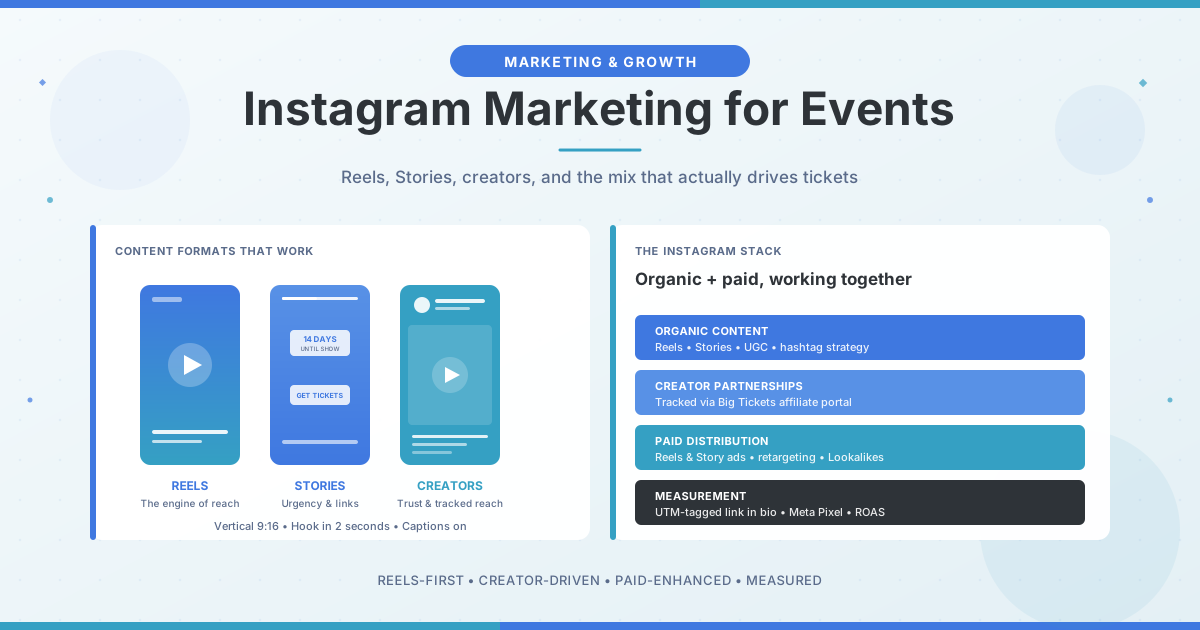
Instagram Reels (short-form vertical video, typically 15–90 seconds) now dominate the feed and drive the overwhelming majority of organic reach for most accounts. A standard photo post in 2026 reaches a small fraction of what a Reel does, and Instagram's algorithm actively prioritizes Reels for non-follower distribution.
For event marketing specifically, Reels work because they showcase what your event actually feels like, which is exactly what buyers are trying to evaluate. Static event posters tell people what. Reels show them why.
What Reels work for events:
- Past event footage. Crowd shots, performance highlights, attendee reactions. Thirty seconds of your last year's event will outsell ten posters.
- Artist or speaker reveals. A short clip introducing a performer or speaker, with text overlay identifying the name and event. Works even better when the artist shares it themselves.
- Behind-the-scenes content. Setup, production, team moments, venue walkthroughs. Authenticity outperforms polish on Reels almost every time.
- Countdown and milestone content. "30 days out," "VIP selling out fast," "one week left for early-bird pricing." Reels with clear stakes convert.
- UGC compilations. Stitch together clips from past attendees, set to strong music. Nothing sells an event like real people having fun at it.
Production principles that consistently work for event Reels:
- Vertical 9:16. Horizontal video gets cropped badly. Shoot vertical or reframe in edit.
- Hook in the first two seconds. If your opening frame doesn't stop the scroll, nothing else in the Reel matters.
- Captions by default. Most users scroll with sound off. Captions are non-negotiable.
- Music from Instagram's commercial library. Using trending audio boosts distribution. Business accounts should use Instagram's commercial-cleared library to avoid copyright takedowns.
- Ship more, polish less. Three quick Reels per week beat one highly produced Reel per month. The algorithm rewards consistency more than production value.
Stories for Urgency, DMs, and Link Distribution
Stories serve a different purpose than Reels. Where Reels drive new-audience reach, Stories communicate to the audience you already have. They're where your existing followers live day-to-day, and where you have the best tool for urgency-based conversions.
High-value Story uses for events:
- Countdown stickers. Native Instagram tool that ticks down to an event or deadline. Drives clicks directly to the linked ticket page.
- Poll and question stickers. "Which headliner are you most excited for?" or "What's your favorite food vendor?" Increases engagement and feeds useful audience intelligence.
- Link stickers to ticket pages. All accounts can now use link stickers directly in Stories. This is the cleanest path to send Instagram traffic to checkout.
- Reposting attendee Stories. When fans tag you in their Stories about your event, reposting creates a self-reinforcing loop. Fans feel seen; their followers see your event.
- Live coverage during the event itself. Real-time Stories from the event drive massive FOMO among followers who didn't attend, which sets up next year's on-sale.
Stories have a 24-hour half-life, so they don't build long-term content equity the way Reels do. But for driving clicks to your current event's ticket page, they're among the highest-converting tools Instagram offers.
Creator Partnerships Are Where the Real Reach Lives
The biggest shift in Instagram event marketing between 2017 and now is the rise of creator-driven distribution. A single Reel from a creator with an engaged audience in your niche will routinely drive more ticket sales than weeks of branded content from your own account. Creators have what your brand account doesn't: a built-in audience that trusts their recommendations.
A practical creator partnership framework:
- Identify creators whose audience overlaps with yours. Don't chase follower counts; chase audience fit. A creator with 15,000 engaged followers in your exact niche (local food scene, a music genre, a professional community) outperforms a creator with 500,000 general followers almost every time.
- Offer something valuable, not just "exposure." Free tickets are the table stakes. VIP access, backstage hospitality, early venue entry, meet-and-greets with artists, or paid sponsorship fees all work depending on the creator's tier and your budget.
- Give creators real creative freedom. Your brief should specify the event, the key dates, and any mandatory messaging (ticket link, discount code if offered). Beyond that, let creators make content in their own voice. Over-scripted creator content reads as advertising and converts poorly.
- Track performance individually. Generic "thanks to our creator partners" doesn't help you know what worked. Big Tickets' affiliate tracking portal supports creator and influencer partnerships, so you can generate unique tracking links for each creator, monitor clicks and ticket conversions per partner, and set commission or bonus structures based on performance. Without tracking, you're guessing at ROI.
- Build repeat relationships. The creators who performed well this year should get first call next year. Long-term partnerships produce better content and lower acquisition costs than one-off deals.
Creator partnerships work especially well when combined with the affiliate portal because creators can see their own performance data, which keeps them engaged and motivated to promote. For more on how to structure partner and affiliate programs overall, see our guide to boosting ticket sales.
Hashtag Strategy: Less Volume, More Precision
The 2017 hashtag strategy was "use 30 hashtags per post." That approach no longer works and in some cases hurts your distribution. Instagram's algorithm now prioritizes content based on engagement signals and user behavior far more than hashtag matching.
What works in 2026:
- Three to five relevant hashtags per post. More than that signals spam. Fewer signals intentional curation.
- Mix broad and niche. A broad tag (e.g., #musicfestival) surfaces you to wider audiences. A niche tag (e.g., #atlantamusicscene) surfaces you to higher-intent audiences. Both belong in your set.
- One branded event hashtag, used consistently. Short, memorable, used across every event-related post. Encourages UGC aggregation and builds a findable trail over time.
- Don't rely on hashtags for discovery. They're an ingredient, not a strategy. Reels distribution, creator partnerships, and paid ads drive far more reach than hashtag optimization in 2026.
User-Generated Content: Your Attendees Are Your Best Marketers
The most powerful content for your event is the content other people make about your event. A fan's excited Story from the venue, a creator's Reel about their experience, a photographer's post tagging your event — these carry trust that brand content can't match.
How to actively build a UGC strategy:
- Make the event photographable. Strong visual moments, signage, backdrops, and Instagram-ready installations give attendees reasons to post. The events that go viral on Instagram are usually the ones that planned for Instagram moments.
- Display your hashtag everywhere on-site. Signage, merch, screens between sets. If people don't know the hashtag, they can't use it.
- Repost the best attendee content in near-real time. During the event, actively monitor your tag and hashtag; repost standout posts within hours. Fans who get reposted tell everyone they know.
- Turn UGC into next year's marketing. Request permission to use attendee content in post-event recap Reels, thank-you emails, and next year's announcement campaigns. It's the highest-converting content you'll have, and it's essentially free.
Paid Instagram: When Organic Isn't Enough
Organic Instagram reach isn't what it used to be, and for most event campaigns, paid distribution is a necessary layer on top of organic content. Instagram ads run through Meta Ads Manager and share the same audience tools, pixel infrastructure, and campaign types as Facebook ads.
Where Instagram paid typically outperforms Facebook paid:
- Audiences under 35. Younger demos spend far more time on Instagram than on Facebook.
- Visual-heavy events. Music festivals, food festivals, experiential events, attractions, and anything where the photo or Reel is the sales pitch.
- Reels placements. Vertical-video ads in the Reels feed convert well for events because they match the content format users are already engaging with.
- Story ads. Full-screen vertical placement with direct link-through to ticket pages. High-intent traffic, often better cost-per-purchase than feed placements.
For a full look at how to run paid Instagram and Meta campaigns for events, including pixel setup, audience strategy, and attribution, see our guide to Meta ads for events. The paid and organic strategies work best when they support each other: use organic content to build a pixel audience that paid retargeting then converts.
Link in Bio: The Most Important Real Estate You Have
The one clickable link in your Instagram bio is where most of your organic Instagram traffic actually goes. Treat it as critical infrastructure.
Principles for your bio link:
- Point it at your current highest-priority action. During active sales: direct link to the ticket page. Between sales cycles: link to a waitlist, blog post, or interest-capture page.
- Use UTM parameters. Tag your bio link with
utm_source=instagram&utm_medium=bioso you can see exactly how much traffic and revenue originates from Instagram in your analytics. - Make the landing page mobile-first. Instagram traffic is almost entirely mobile. A ticket page that loads slowly, requires account creation, or isn't optimized for thumb-scrolling will hemorrhage conversions.
- Update it when the priority changes. A bio link pointing to a sold-out ticket page is worse than no link at all. Keep it current.
The link in bio is simple in concept and consistently under-maintained in practice. Getting this one detail right is usually worth more than most other Instagram optimizations organizers worry about.
What Not to Do
A few tactics that used to work (or seem like they should work) but now hurt more than help:
- Follow/unfollow cycles and follow-for-follow. Algorithmically penalized. Builds fake audiences that don't convert. Skip.
- Automated DMs to new followers. Low-value spam signal. Often triggers Instagram's spam protections against your account.
- Buying followers. Kills your engagement rate (ratio of interactions to followers) and damages organic reach. Expensive way to make your account perform worse.
- Stuffing 30 hashtags. No longer helpful; can be flagged as spammy.
- Only posting event posters. Static single-image promotional content is the lowest-reach content type on Instagram. If it's all you post, the algorithm learns your account isn't worth distributing.
- Ignoring engagement on your posts. If you're not replying to comments and DMs, Instagram's algorithm reads that as low-value content and distributes you less. Engagement rate is a two-way metric.
Instagram Rewards Consistent, Real, Volume-Focused Execution
The events that win on Instagram in 2026 aren't the ones with the best-produced content. They're the ones that show up consistently, use the formats the platform actually rewards (Reels, Stories, UGC), build real relationships with creators, and measure what's working.
Start with Reels as your foundation. Use Stories for urgency. Build creator partnerships with proper tracking. Optimize your link in bio. Layer paid distribution on top of strong organic content. And respect the platform's current reality rather than running the 2017 playbook on 2026 Instagram.
For how to measure whether any of this is working, see our guide to measuring event marketing ROI. Instagram is a channel, not a strategy, and the channels that earn the most budget are the ones you can prove are selling tickets.
Ready to Run a Smarter Event?
Big Tickets helps festivals, fairs, concerts, and live events sell more tickets, streamline operations, and deliver a better attendee experience. No subscriptions, no setup fees.
Request a Demo